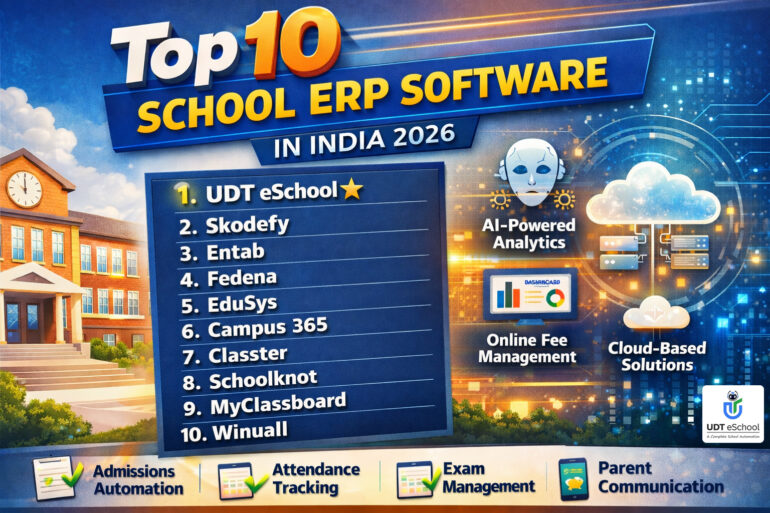
Top 10 Best School ERP Software in India (2026 Guide)
India’s education sector is undergoing rapid digital transformation. Schools are increasingly adopting School ERP software to streamline administrative processes, improve communication, and enhance academic management.
From attendance tracking and fee management to AI-powered analytics, modern ERP systems allow schools to manage operations efficiently through a single integrated platform.
In this guide, we explore the Top 10 School ERP Software in India for 2026, compare their features, and help schools choose the right digital management system.
What is School ERP Software?
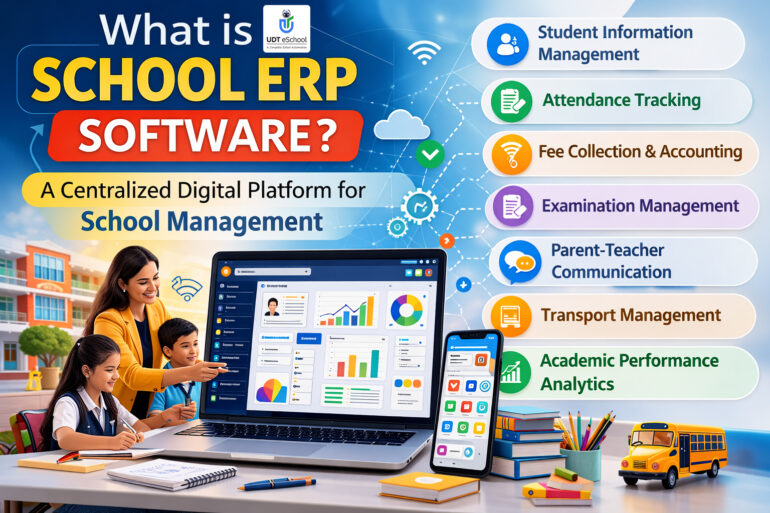
School ERP (Enterprise Resource Planning) software is a centralized digital platform that integrates academic and administrative operations within a school.
Instead of managing separate systems for attendance, examinations, admissions, and fee collection, schools can automate everything through a single dashboard.
Key modules typically include:
-
Student information management
-
Attendance tracking
-
Fee collection and accounting
-
Examination management
-
Parent-teacher communication
-
Transport management
-
Academic performance analytics
According to education technology insights shared by organizations like UNESCO, digital systems are becoming essential for improving school administration and learning outcomes.
External Reference:
UNESCO and UNICEF in Digital Technology
Why Schools Need ERP Software in 2026
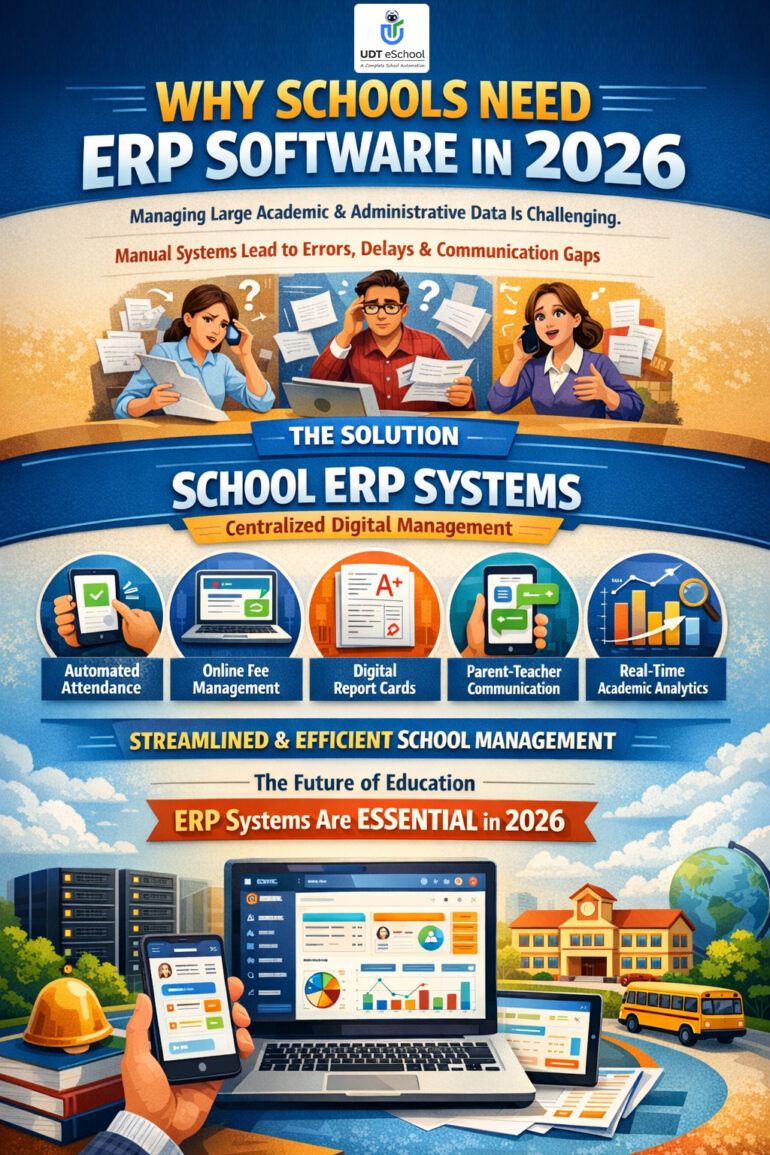
Modern schools handle a large amount of academic and administrative data. Manual systems often lead to errors, delays, and communication gaps between teachers, administrators, and parents.
School ERP platforms help schools manage operations efficiently by providing centralized digital management tools.
As schools continue adopting digital infrastructure, ERP systems are becoming essential for efficient and transparent school management.
Traditional school administration relies heavily on manual records and disconnected systems. This often leads to inefficiencies, data errors, and poor communication.
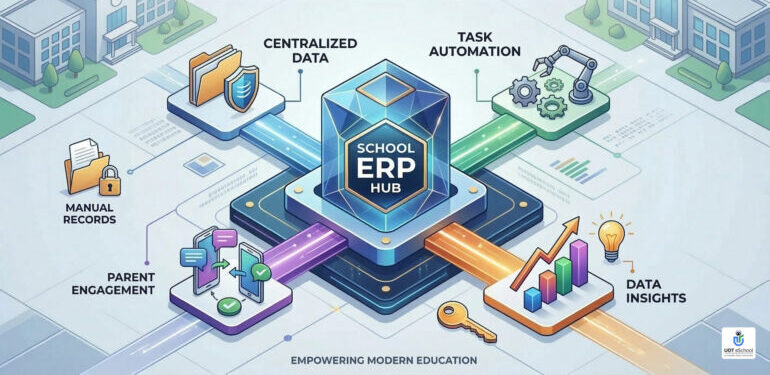
School ERP platforms solve these problems by offering:
Centralized Data Management
All academic and administrative information is stored securely in one system.
Automation of Administrative Tasks
Routine tasks like attendance recording, fee reminders, and report generation are automated.
Real-Time Parent Communication
Parents receive instant notifications regarding attendance, homework, and announcements.
Data-Driven Decision Making
School management can analyze academic performance and institutional trends.
Top 10 School ERP Software in India (2026)
Below is a curated list of the most widely used school ERP platforms in India.
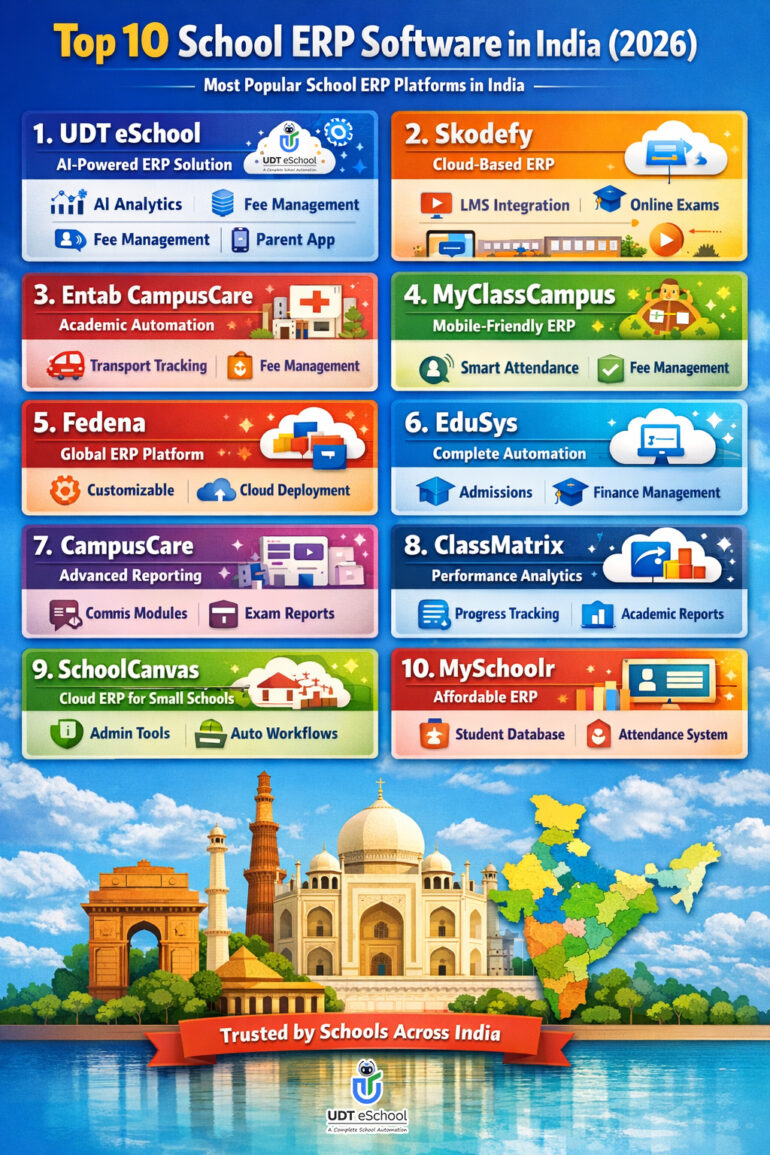
1. UDT eSchool
UDT eSchool is an advanced AI-powered school ERP platform designed specifically for modern schools in India.
Key Features
-
AI-based academic analytics
-
Automated attendance system
-
Online fee management
-
Parent mobile app
-
CBSE compatible academic modules
-
Smart reporting dashboards
Internal Link Suggestion:
School ERP with AI and ML
2. Skodefy
Skodefy is a cloud-based ERP platform offering modules for school administration, communication, and digital classrooms.
Key Features
-
Cloud infrastructure
-
LMS integration
-
Student information system
-
Online examination tools
3. Entab CampusCare
Entab CampusCare is widely used by large educational institutions for academic and administrative automation.
Key Features
-
Fee management
-
Transport tracking
-
Academic reporting
-
Communication portals
External Reference
https://entab.in
4. MyClassCampus
MyClassCampus focuses on mobile-friendly school management systems and communication tools.
Key Features
-
Parent mobile apps
-
Smart attendance
-
Homework management
5. Fedena
Fedena is a globally recognized school ERP platform used by institutions in multiple countries.
Key Features
-
Modular architecture
-
Customizable features
-
Cloud deployment
External Reference
https://fedena.com
6. EduSys
EduSys offers a wide range of automation modules including admissions, finance management, and examinations.
Key Features
-
Student lifecycle management
-
Admission automation
-
Financial accounting
7. CampusCare
CampusCare provides advanced reporting and analytics features for school management.
Key Features
-
Communication modules
-
Attendance management
-
Examination reports
8. ClassMatrix
ClassMatrix specializes in performance monitoring and academic analytics.
Key Features
-
Student progress tracking
-
Performance analytics
-
Academic reports
9. SchoolCanvas
SchoolCanvas is a cloud-based ERP designed for small and mid-size schools.
Key Features
-
School administration tools
-
Communication modules
-
Automated workflows
10. MySchoolr
MySchoolr focuses on affordable ERP systems for small schools.
Key Features
-
Basic school automation
-
Student database
-
Attendance system
Why Compare School ERP Software?
Choosing the right school ERP system is important because each platform offers different features. The comparison below highlights how major ERP solutions differ in terms of automation, analytics, and administrative capabilities.
School ERP Software Feature Comparison
| Features | UDT eSchool ⭐ | Skodefy | Entab | Fedena | EduSys |
|---|---|---|---|---|---|
| Student Information System | ✔ | ✔ | ✔ | ✔ | ✔ |
| Online Admission Management | ✔ | ✔ | ✔ | ✔ | ✔ |
| Attendance Management | ✔ | ✔ | ✔ | ✔ | ✔ |
| Online Fee Payment | ✔ | ✔ | ✔ | ✔ | ✔ |
| Examination Management | ✔ | ✔ | ✔ | ✔ | ✔ |
| Parent Mobile App | ✔ | ✔ | ✔ | ✔ | ✔ |
| Teacher Mobile App | ✔ | ✔ | ✔ | ✔ | ✔ |
| Homework & Assignment Module | ✔ | ✔ | ✔ | Limited | Limited |
| Transport & GPS Tracking | ✔ | Limited | ✔ | Limited | Limited |
| Library Management | ✔ | ✔ | ✔ | ✔ | Limited |
| Hostel Management | ✔ | Limited | ✔ | ✔ | Limited |
| AI Based Analytics | ✔ | ✖ | ✖ | ✖ | ✖ |
| BI Dashboard | ✔ | ✖ | ✖ | ✖ | ✖ |
| CBSE / ICSE Compatible Modules | ✔ | ✔ | ✔ | ✔ | ✔ |
| Cloud Based Platform | ✔ | ✔ | ✔ | ✔ | ✔ |
| Multi School Management | ✔ | Limited | Limited | ✔ | Limited |
| Data Security & Backup | ✔ | ✔ | ✔ | ✔ | ✔ |
Note: Features listed are based on publicly available information and may vary depending on software versions or customization.
Key Insight
Most ERP platforms offer basic automation modules, but advanced capabilities like AI analytics, BI dashboards, and predictive reporting are still limited.
This is where platforms like UDT eSchool provide a significant advantage by offering next-generation AI-powered school management features.
Why UDT eSchool Stands Out

While most ERP platforms focus mainly on administrative automation, UDT eSchool provides advanced AI-driven analytics and business intelligence dashboards that help school administrators make data-driven decisions.
This makes it one of the most comprehensive school ERP platforms available for Indian schools in 2026.
School ERP Software Pricing in India
The cost of ERP software varies depending on school size, number of students, and modules required.
Average pricing structure:
| School Size | Estimated Annual Cost | Typical Features Included |
|---|---|---|
| Small Schools (Up to 500 Students) | ₹20,000 – ₹60,000 | Student management, attendance, fee management, basic reports |
| Medium Schools (500 – 1500 Students) | ₹60,000 – ₹1.5 Lakh | Admission automation, mobile apps, examination management, communication tools |
| Large Schools (1500+ Students) | ₹1.5 – ₹5 Lakh | Advanced analytics, transport management, multi-campus support, AI reporting |
Factors That Affect School ERP Pricing
-
Number of students
-
Number of modules required
-
Cloud vs on-premise deployment
-
Mobile apps and integrations
-
Customization requirements
School ERP Implementation Timeline
Implementing a school ERP system typically follows a structured process to ensure smooth adoption by administrators, teachers, students, and parents. The timeline may vary depending on school size and customization requirements.
| Implementation Stage | Key Activities | Estimated Time |
|---|---|---|
| Requirement Analysis | Identify school needs, modules required, number of users, and existing system integration requirements. | 1 – 2 Weeks |
| ERP Setup & Configuration | Install the ERP platform, configure modules, and set up school structure including classes, subjects, and departments. | 1 – 2 Weeks |
| Data Migration | Import student records, staff data, academic information, and historical data into the ERP system. | 1 Week |
| Training & Onboarding | Train school administrators, teachers, and staff to use the ERP platform effectively. | 1 Week |
| Testing & Go Live | Test modules, verify reports, and launch the ERP system for daily school operations. | 1 Week |
School ERP implementation usually takes between 4 to 6 weeks depending on the number of modules, level of customization, and training requirements. Cloud-based ERP platforms often allow faster deployment compared to traditional on-premise systems.
School ERP Features Checklist (Must-Have Modules)
A modern school ERP system should include a wide range of modules to manage academic, administrative, and communication processes efficiently. The checklist below highlights the essential features schools should look for when selecting an ERP platform.
| Module | Description |
|---|---|
| Student Information System | Centralized database for managing student profiles, academic records, and personal details. |
| Online Admission Management | Automates application forms, document submission, and admission approvals. |
| Attendance Management | Digital attendance tracking for students and staff with real-time reports. |
| Fee Management System | Online fee collection, payment gateway integration, and automated reminders. |
| Examination Management | Schedule exams, generate report cards, and track academic performance. |
| Homework & Assignment Module | Teachers can assign homework digitally and track student submissions. |
| Parent Communication Portal | Mobile apps or portals for parents to receive notices, attendance updates, and announcements. |
| Transport Management | Bus route planning, GPS tracking, and transport fee management. |
| Library Management | Digital cataloging, book issuing, and return tracking. |
| Hostel Management | Manage hostel rooms, occupancy, and student accommodation records. |
| Timetable Management | Create and manage class schedules for teachers and students. |
| Inventory Management | Track school assets such as lab equipment, books, and classroom resources. |
| HR & Payroll Management | Manage teacher attendance, salaries, leave records, and payroll processing. |
| Analytics & Reporting | Generate insights on academic performance, attendance trends, and financial reports. |
| Mobile Apps for Teachers & Parents | Access ERP features through mobile apps for better communication and accessibility. |
Schools evaluating ERP platforms should ensure the system includes core modules like admissions, attendance, examinations, fee management, and communication tools. Advanced ERP platforms also offer AI analytics, BI dashboards, and predictive academic reporting to support data-driven decision making.
Benefits of AI Powered School ERP
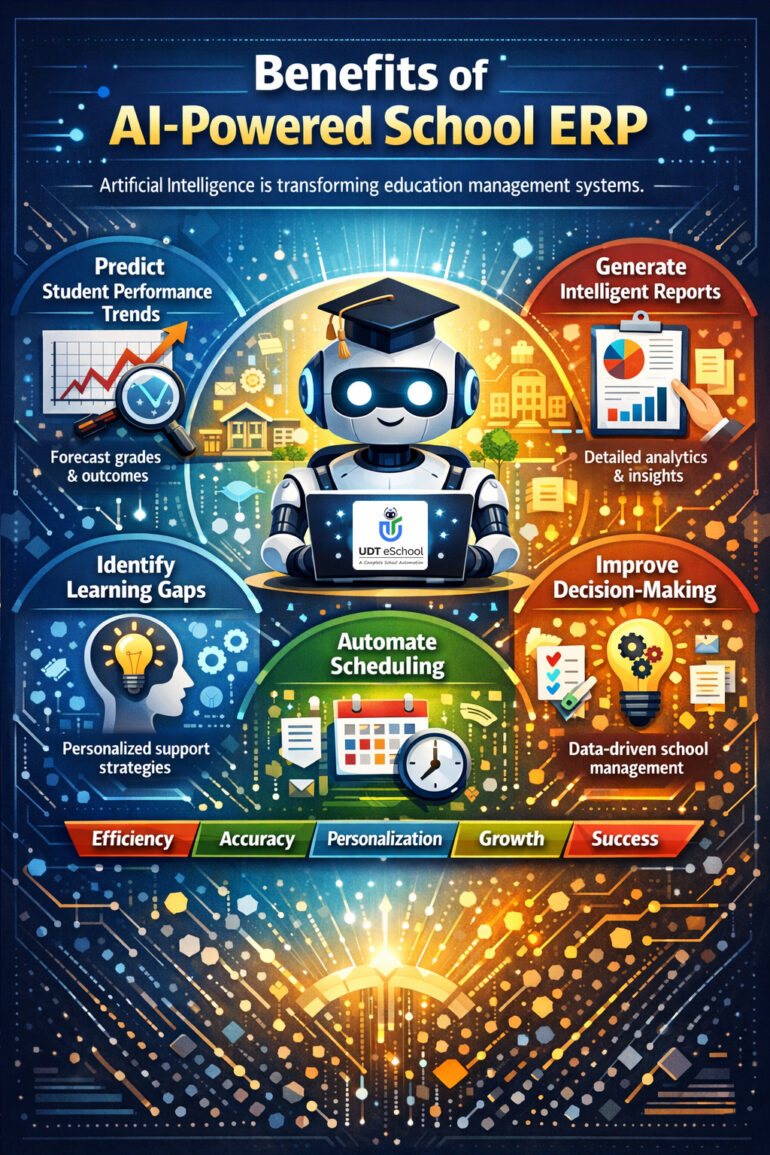
Artificial Intelligence is transforming education management systems.
AI-powered ERP platforms enable schools to:
-
Predict student performance trends
-
Generate intelligent academic reports
-
Identify learning gaps
-
Automate scheduling
-
Improve decision-making processes
Related: AI in School ERP 2026 Trends
How to Choose the Best School ERP Software
Selecting the right ERP platform depends on several factors.
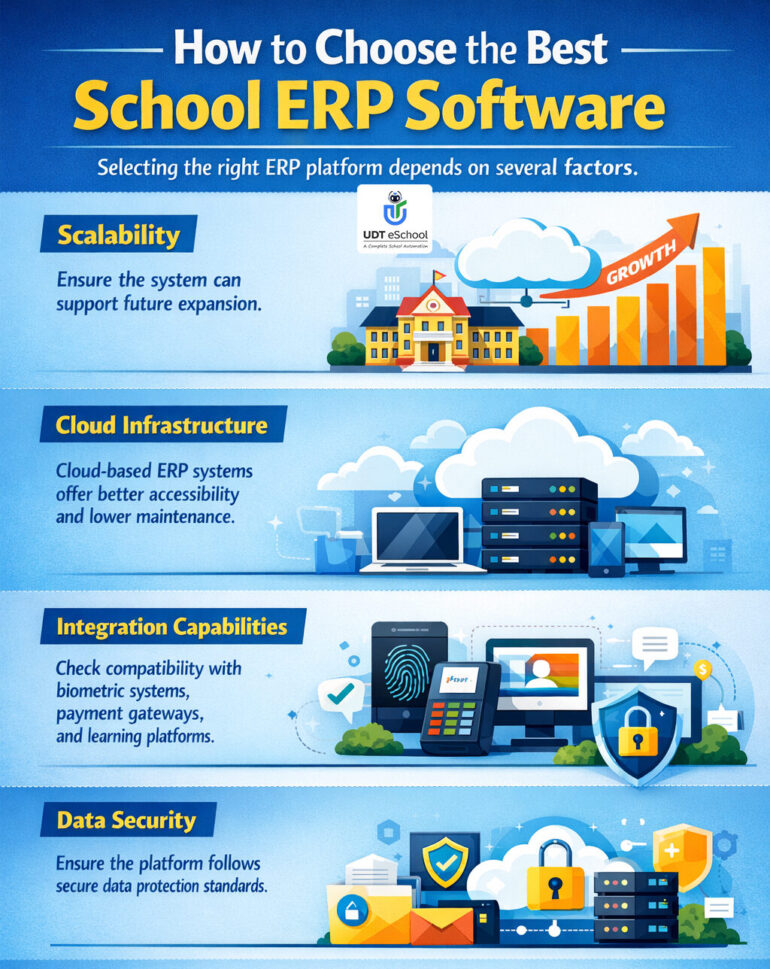
Scalability
Ensure the system can support future expansion.
Cloud Infrastructure
Cloud-based ERP systems offer better accessibility and lower maintenance.
Integration Capabilities
Check compatibility with biometric systems, payment gateways, and learning platforms.
Data Security
Ensure the platform follows secure data protection standards.
People Also Search For (School ERP Queries)
When researching school ERP systems, school administrators often search for related topics such as:
-
Best school ERP software in India
-
School ERP software price in India
-
AI powered school ERP system
-
School management software for CBSE schools
-
Cloud based school ERP software
-
School ERP software features checklist
-
ERP software for small schools
-
School ERP implementation guide
-
Student management software
-
School ERP with mobile app
These queries reflect the growing demand for advanced school management platforms that integrate automation, analytics, and communication tools.
Frequently Asked Questions
What is school ERP software?
School ERP software is a digital platform used to manage admissions, attendance, examinations, fee collection, and communication within schools.
Which is the best school ERP software in India?
Several ERP platforms exist, but solutions like UDT eSchool provide advanced AI-based features designed for modern schools.
How much does school ERP software cost in India?
ERP systems typically cost between ₹20,000 and ₹5 lakh annually, depending on modules and school size.
Is school ERP suitable for small schools?
Yes. Cloud-based ERP systems are scalable and suitable for both small schools and large institutions.
Conclusion
School ERP software is becoming a fundamental component of digital education infrastructure. By automating administrative tasks and enabling data-driven insights, ERP systems allow schools to operate more efficiently and deliver better educational experiences.
Among the available platforms, UDT eSchool stands out as a powerful AI-driven ERP solution designed to meet the evolving needs of Indian schools.
Schools planning digital transformation in 2026 should carefully evaluate ERP solutions to ensure they adopt a system that supports both academic and administrative excellence.
Why UDT eSchool Stands Out Among School ERP Platforms
Among the many ERP platforms available today, some solutions provide advanced capabilities designed specifically for modern schools.
While many school ERP systems focus mainly on basic administrative automation, UDT eSchool goes beyond traditional ERP functionality by integrating advanced analytics, automation, and intelligent reporting tools.
Key capabilities that differentiate UDT eSchool include:
-
AI-powered academic analytics to monitor student performance trends
-
Business Intelligence dashboards for real-time institutional insights
-
Integrated mobile apps for administrators, teachers, parents, and students
-
Automated fee management and financial reporting
-
CBSE and ICSE compatible academic modules
-
Cloud-based infrastructure with secure data management
These capabilities help schools reduce administrative workload, improve decision-making, and enhance communication across the entire education ecosystem.
As digital transformation accelerates in education, platforms like UDT eSchool are redefining how modern schools manage operations and academic performance.
Explore how UDT eSchool can transform school management.
👉 Request a Free Demo Today
Related Articles