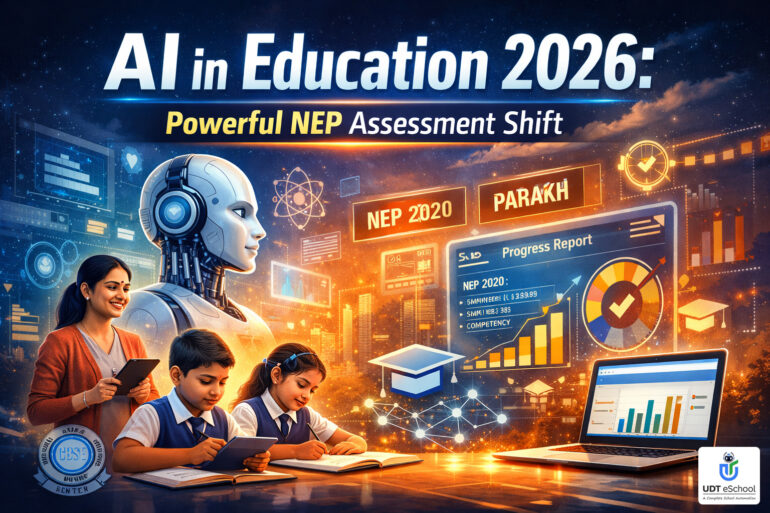
🚀 AI in Education 2026: NEP, PARAKH & the Future of School Assessment
India’s education system is undergoing a powerful transformation under the National Education Policy 2020 and the introduction of PARAKH, guided by reforms from the Central Board of Secondary Education.
These reforms emphasize:
-
Competency-based learning
-
Holistic progress tracking
-
Skill-driven evaluation
-
Reduced rote memorization
As we move into 2026, Artificial Intelligence is becoming the operational backbone that enables schools to implement these reforms effectively.
1️⃣ NEP 2020: From Rote Learning to Real Competency
According to the official NEP document published by the Ministry of Education, the goal is to shift toward experiential and outcome-based education.
👉 Official Policy Reference: https://www.education.gov.in/sites/upload_files/mhrd/files/NEP_Final_English_0.pdf
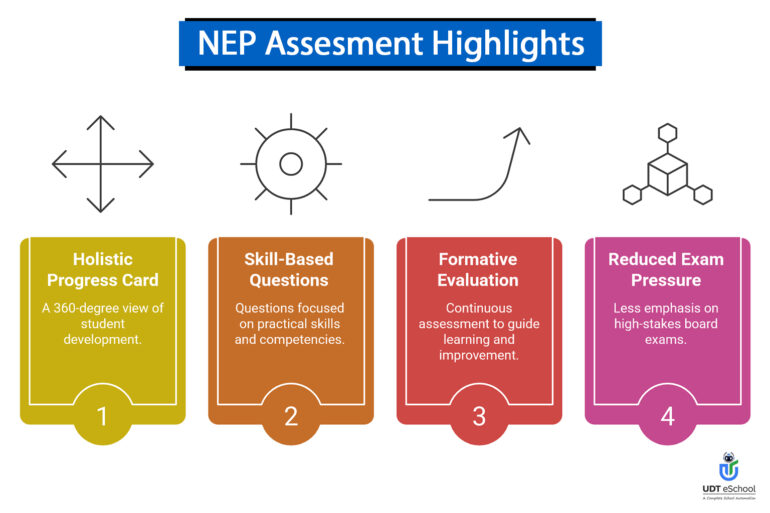
NEP Assessment Highlights:
-
360-degree holistic progress card
-
Skill-based and competency-based questions
-
Formative and adaptive evaluation
-
Reduced high-stakes board exam pressure
Manual systems struggle to handle such dynamic evaluation models.
This is where AI-driven systems become essential.
2️⃣ PARAKH: Standardizing Assessment Across India
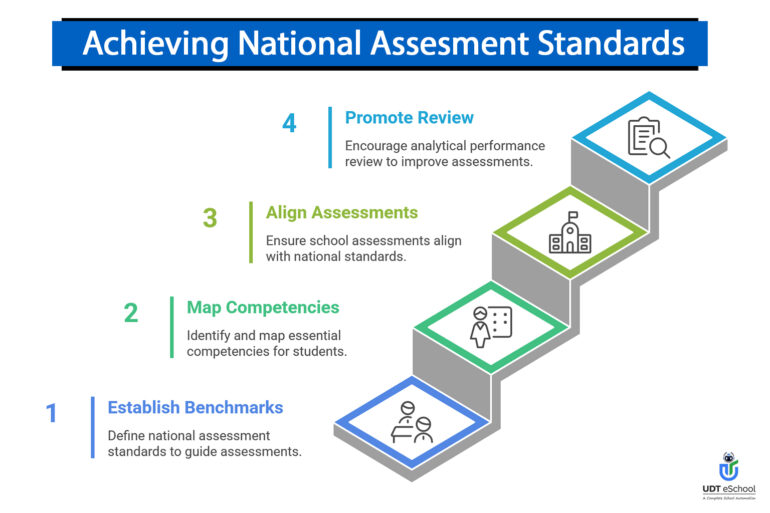
PARAKH (Performance Assessment, Review, and Analysis of Knowledge for Holistic Development) was established under National Council of Educational Research and Training to bring uniformity in assessments.
👉 Official NCERT Resource: https://ncert.nic.in
PARAKH aims to:
-
Create national assessment benchmarks
-
Ensure competency mapping
-
Align school assessments with national standards
-
Promote analytical performance review
For schools, this means:
✔ Standardized evaluation formats
✔ Data-backed assessment insights
✔ Structured competency frameworks
Without integrated ERP and analytics tools, implementation becomes operationally overwhelming.
3️⃣ CBSE’s Push Toward AI & Competency-Based Exams
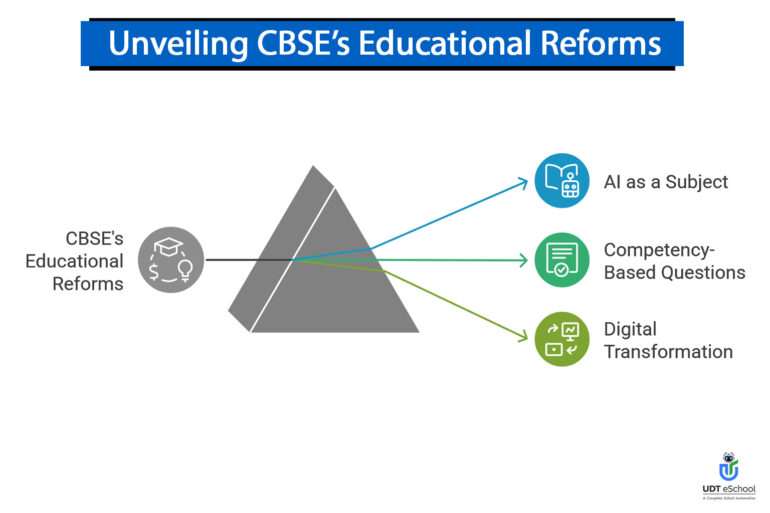
The Central Board of Secondary Education has already:
-
Introduced Artificial Intelligence as a subject
-
Increased competency-based questions in board exams
-
Issued academic circulars encouraging digital transformation
👉 CBSE Academic Portal: https://www.cbseacademic.nic.in
CBSE’s exam reforms clearly indicate that schools must modernize assessment infrastructure.
4️⃣ What AI in Education 2026 Actually Means
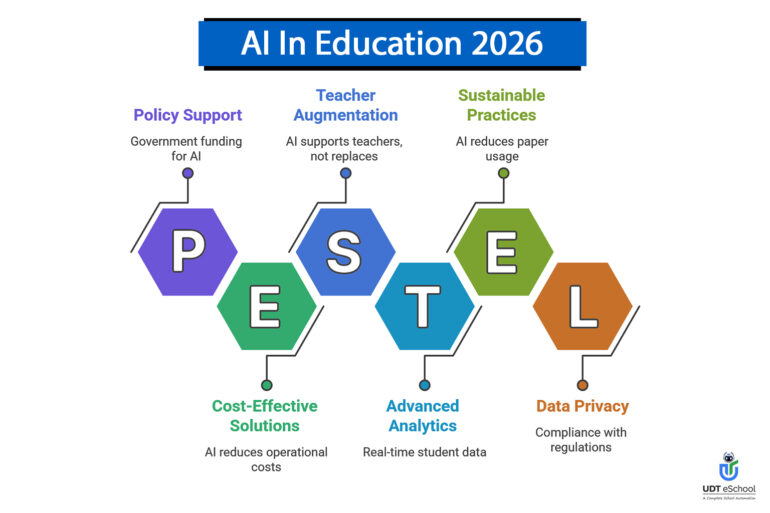
AI in 2026 is not about replacing teachers.
It means:
📊 Intelligent Question Bank Generation
-
Bloom’s taxonomy alignment
-
Competency-level tagging
-
Auto difficulty mapping
📈 Real-Time Student Analytics
-
Skill gap identification
-
Performance forecasting
-
Outcome tracking
🧠 Adaptive Learning Assistance
-
Instant concept explanations
-
Practice question generation
-
AI-supported academic guidance
5️⃣ The Ground Reality: Challenges Schools Face
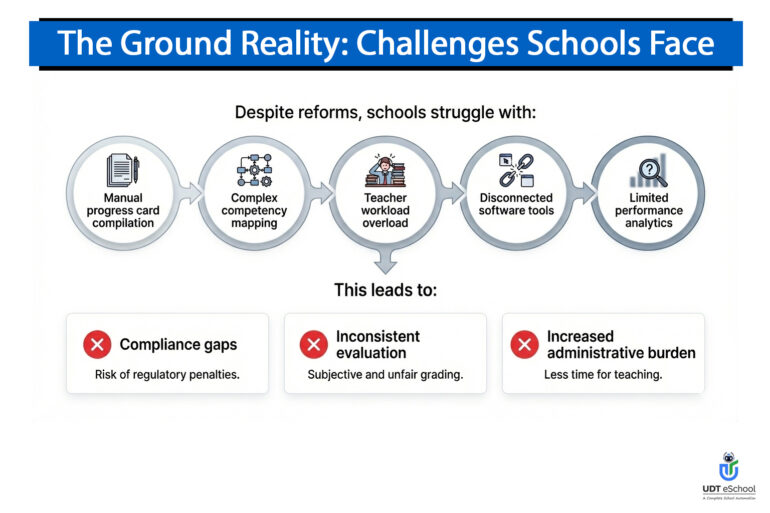
Despite reforms, schools struggle with:
-
Manual progress card compilation
-
Complex competency mapping
-
Teacher workload overload
-
Disconnected software tools
-
Limited performance analytics
This leads to:
❌ Compliance gaps
❌ Inconsistent evaluation
❌ Increased administrative burden
6️⃣ How UDT eSchool Supports NEP & PARAKH Implementation
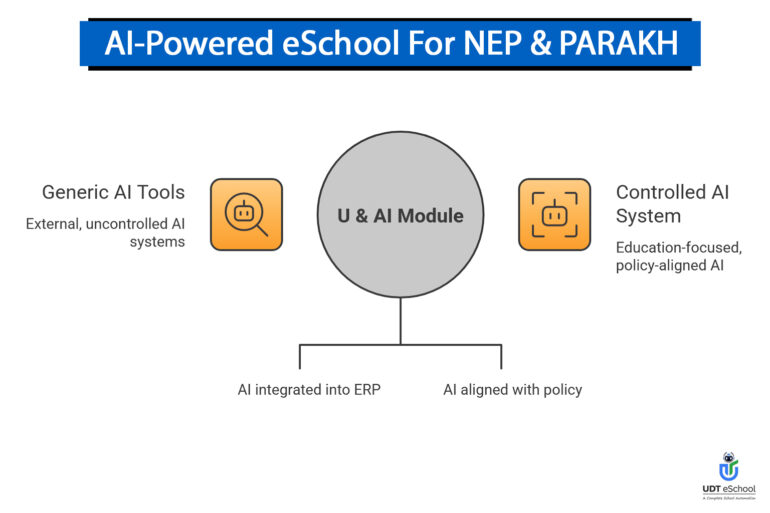
UDT eSchool integrates AI directly inside its ERP ecosystem through the “U & AI” module.
Instead of using external generic tools, schools get a controlled, education-focused AI system aligned with policy reforms.
🎓 U & AI Module – Practical Academic Support
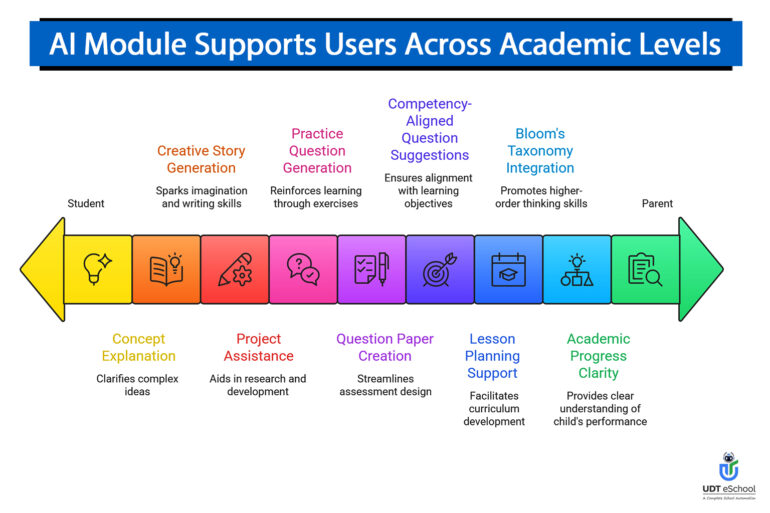
For Students:
-
Concept explanation
-
Creative story generation
-
Project assistance
-
Practice question generation
For Teachers:
-
Question paper creation
-
Competency-aligned question suggestions
-
Lesson planning support
-
Bloom’s taxonomy integration
For Parents:
-
Academic progress clarity
-
Homework assistance support
-
Transparent performance insights
7️⃣ Holistic Progress Card Automation
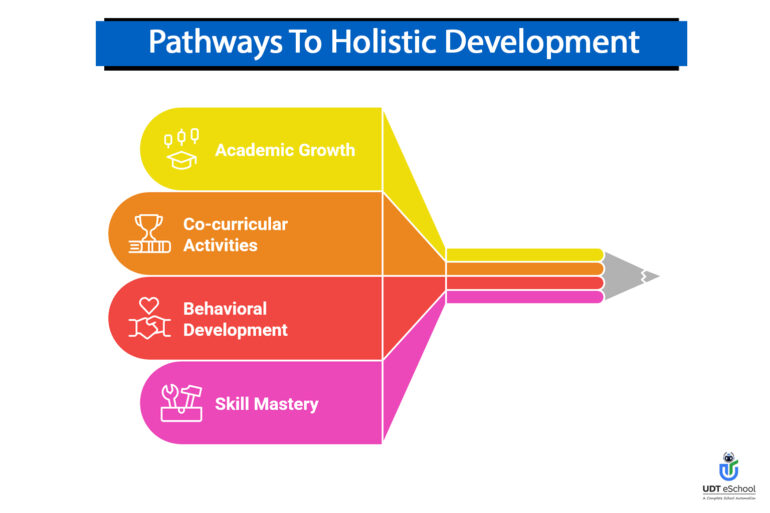
NEP mandates a 360-degree progress card including:
-
Academic growth
-
Co-curricular activities
-
Behavioral development
-
Skill mastery
UDT eSchool enables automated holistic report generation aligned with NEP standards.
🔗 Related: 👉 Holistic Progress Card with AI in Schools | 2026 Guide
This ensures:
✔ Outcome-based grading
✔ Reduced teacher workload
✔ Structured evaluation compliance
8️⃣ AI-Powered Online Examination & Analytics
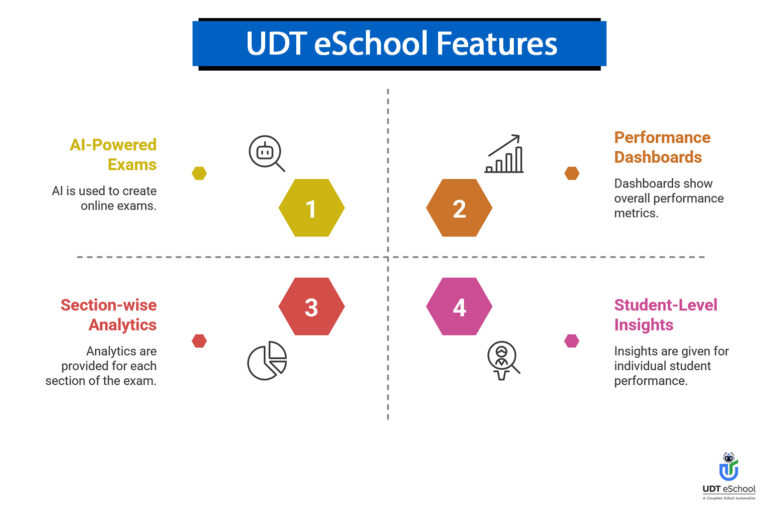
Modern assessments require digital infrastructure.
UDT eSchool offers:
-
AI-powered online exams
-
Performance dashboards
-
Section-wise analytics
-
Student-level insights
🔗 Related: 👉 Smart Attendance Management System for Schools in 2026
This supports:
✔ Competency tracking
✔ Performance comparison
✔ Data-driven improvement
9️⃣ Attendance & Continuous Evaluation Integration
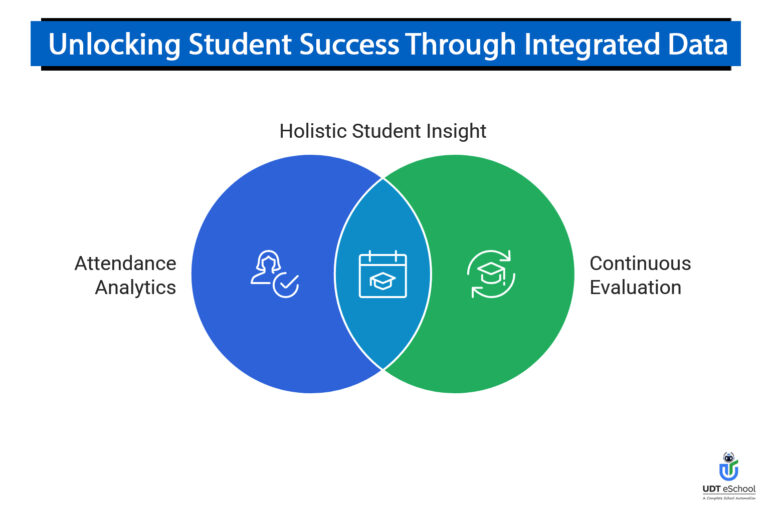
Continuous assessment is incomplete without attendance analytics.
UDT eSchool integrates smart attendance tracking.
🔗 Related: 👉 Increase School Admission Leads in 2026 | With AI Enabled UDT eSchool ERP
Attendance patterns can now correlate with academic performance trends — a powerful insight for administrators.
People Also Ask: AI in Education 2026
What is AI in Education 2026 in simple terms?
AI in Education 2026 means using artificial intelligence in schools to improve learning, automate assessments, and track student performance. It helps teachers create competency-based questions, monitor progress, and align with NEP 2020 reforms while reducing administrative workload.
How is AI changing school assessments in India?
AI is transforming school assessments by enabling competency-based evaluation, real-time analytics, adaptive testing, and automated progress reports. Under NEP 2020 and PARAKH guidelines, schools now focus on skills and understanding rather than rote memorization.
How does NEP 2020 promote AI in education?
The National Education Policy 2020 encourages technology integration to support personalized learning, digital assessments, and data-driven evaluation. AI tools help schools implement 360-degree progress cards and competency-based testing more efficiently.
What is PARAKH in the new education system?
PARAKH is a national assessment body established under NCERT to standardize competency-based evaluation across India. It ensures schools align with structured benchmarks and adopt transparent, data-driven assessment systems.
Will AI replace teachers in schools?
No, AI will not replace teachers. AI in Education 2026 supports teachers by automating repetitive tasks, generating structured assessments, and providing performance analytics. Teachers remain essential for mentoring, creativity, emotional development, and classroom leadership.
How can schools prepare for AI-based assessment systems?
Schools should adopt AI-integrated ERP systems that align with NEP 2020 assessment reforms and CBSE competency-based frameworks. This includes implementing digital exams, automated holistic progress cards, and real-time analytics dashboards.
Is AI mandatory under CBSE reforms?
The Central Board of Secondary Education promotes AI learning and competency-based questions but does not mandate a specific software. However, digital assessment tools are strongly encouraged to meet modern evaluation standards.
What are the benefits of AI-powered school ERP systems?
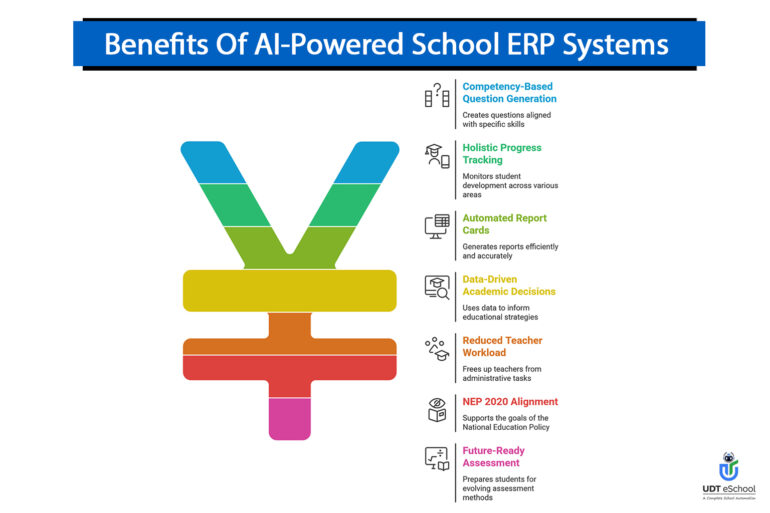
AI-powered ERP systems offer:
-
Competency-based question generation
-
Holistic progress tracking
-
Automated report cards
-
Data-driven academic decisions
-
Reduced teacher workload
They help schools align with NEP 2020 and future-ready assessment models.
🔒 Responsible AI in Education
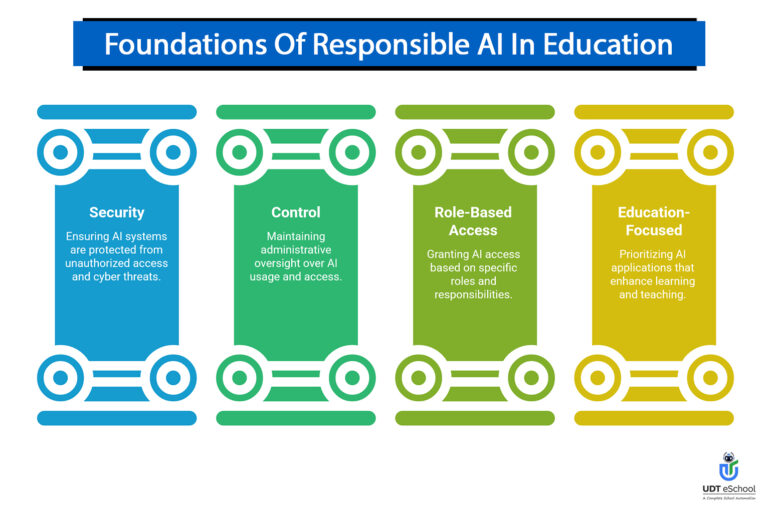
AI in schools must be:
-
Secure
-
Controlled
-
Role-based
-
Education-focused
UDT eSchool ensures:
✔ Admin control over AI access
✔ Structured academic responses
✔ Secure data handling
✔ ERP-level integration
This prevents misuse and maintains institutional discipline.
🔮 The Future of School Assessment Beyond 2026
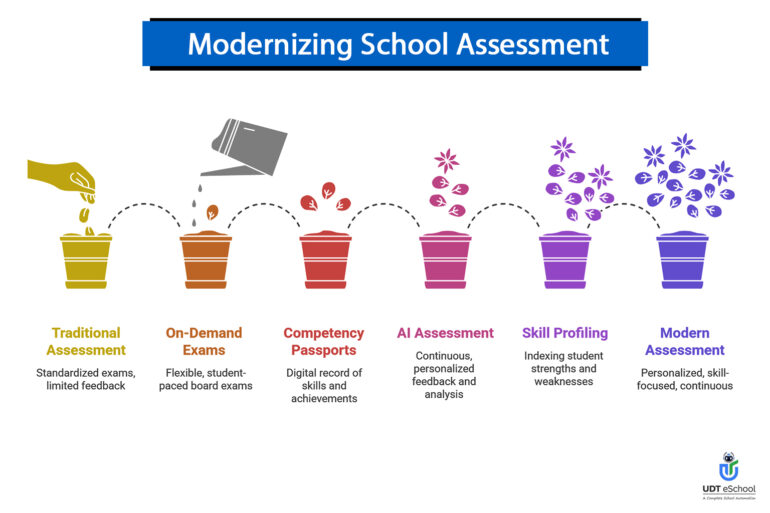
We are moving toward:
-
On-demand board exams
-
Competency passports
-
AI-based continuous assessment
-
Skill-indexed student profiling
Schools that modernize early will gain:
📈 Academic excellence
📊 Stronger board results
🏆 Institutional credibility
👨👩👧 Higher parent trust
✅ Final Thoughts
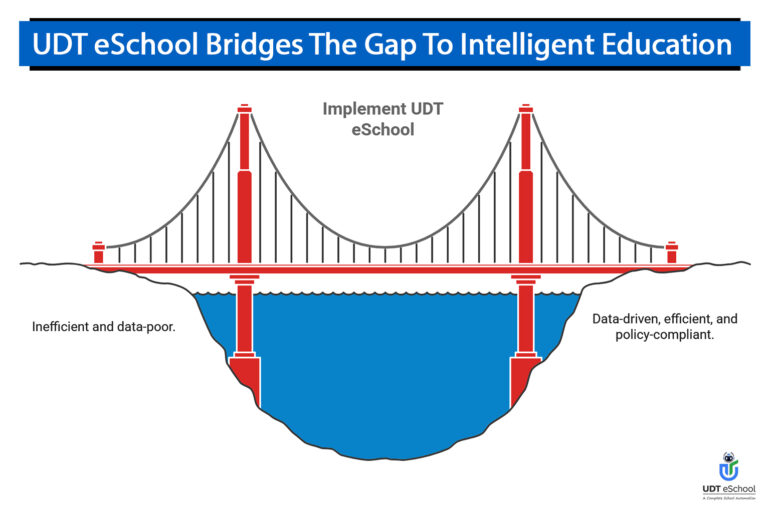
The alignment of:
-
National Education Policy 2020
-
PARAKH Assessment Framework
-
CBSE competency-based reforms
-
AI-powered ERP systems
…marks a historic turning point in Indian education.
Schools must transition from manual evaluation models to intelligent, data-driven systems.
UDT eSchool enables this transition responsibly — blending policy compliance with practical technology.
📞 Call to Action
If your institution is preparing for NEP-aligned assessments and AI-powered academic systems, now is the time to modernize.
👉 Book a personalized demo of UDT eSchool today and lead confidently into the future of school assessment.
Frequently Asked Questions (FAQs)
1. What is AI in Education 2026?
AI in Education 2026 refers to the integration of artificial intelligence tools in schools to support competency-based learning, assessment analytics, personalized instruction, and NEP-aligned evaluation systems. It enables real-time student performance tracking, automated question generation, and holistic progress reporting.
2. How does AI support NEP 2020 assessment reforms?
Under the National Education Policy 2020, assessment must shift from rote memorization to competency-based evaluation. AI supports this by:
-
Generating Bloom’s taxonomy-based questions
-
Mapping student performance to learning outcomes
-
Automating holistic progress cards
-
Providing continuous formative assessment insights
AI reduces teacher workload while ensuring NEP compliance.
3. What is PARAKH and why is it important for schools?
PARAKH (Performance Assessment, Review, and Analysis of Knowledge for Holistic Development) is a national assessment regulator established under NCERT.
It aims to:
-
Standardize competency-based assessments
-
Create uniform evaluation benchmarks
-
Improve transparency in school assessment
Schools must adopt structured, data-driven systems to align with PARAKH guidelines.
4. How is CBSE changing assessment patterns?
The Central Board of Secondary Education is increasing competency-based questions in board exams and promoting digital academic tools.
CBSE reforms now emphasize:
-
Application-based questions
-
Analytical thinking
-
Continuous evaluation
-
Skill-focused grading
Schools using AI-powered systems are better prepared for these changes.
5. Can AI replace teachers in schools?
No. AI in Education 2026 is designed to support teachers, not replace them.
AI helps by:
-
Automating repetitive tasks
-
Generating structured assessments
-
Providing analytics insights
-
Assisting with lesson planning
Teachers remain central to mentoring, emotional development, and classroom leadership.
6. How can schools implement AI responsibly?
Responsible AI implementation requires:
-
Secure data handling
-
Role-based access control
-
Admin oversight
-
Education-focused AI usage
Schools should adopt ERP systems that integrate AI within a controlled academic environment rather than relying on open, unmanaged tools.
7. How does UDT eSchool align with AI in Education 2026?
UDT eSchool integrates AI directly into its ERP through the “U & AI” module. It supports:
-
Competency-based question generation
-
Holistic progress card automation
-
NEP-aligned assessment mapping
-
PARAKH-ready performance analytics
This ensures schools can transition smoothly into future-ready assessment systems.
8. What are the benefits of AI-powered assessment systems?
Benefits include:
-
Reduced teacher workload
-
Real-time student analytics
-
Standardized evaluation formats
-
Improved board exam readiness
-
Better parent transparency
AI enables schools to move from manual processes to intelligent academic systems.

Education Technology Consultant at UDt eSchool with 10+ years of experience helping schools digitize operations and implement CBSE-aligned systems.